
Smart Campus Training Programme — Innovation & Technology Enrichment Course (Secondary Students) Day Two
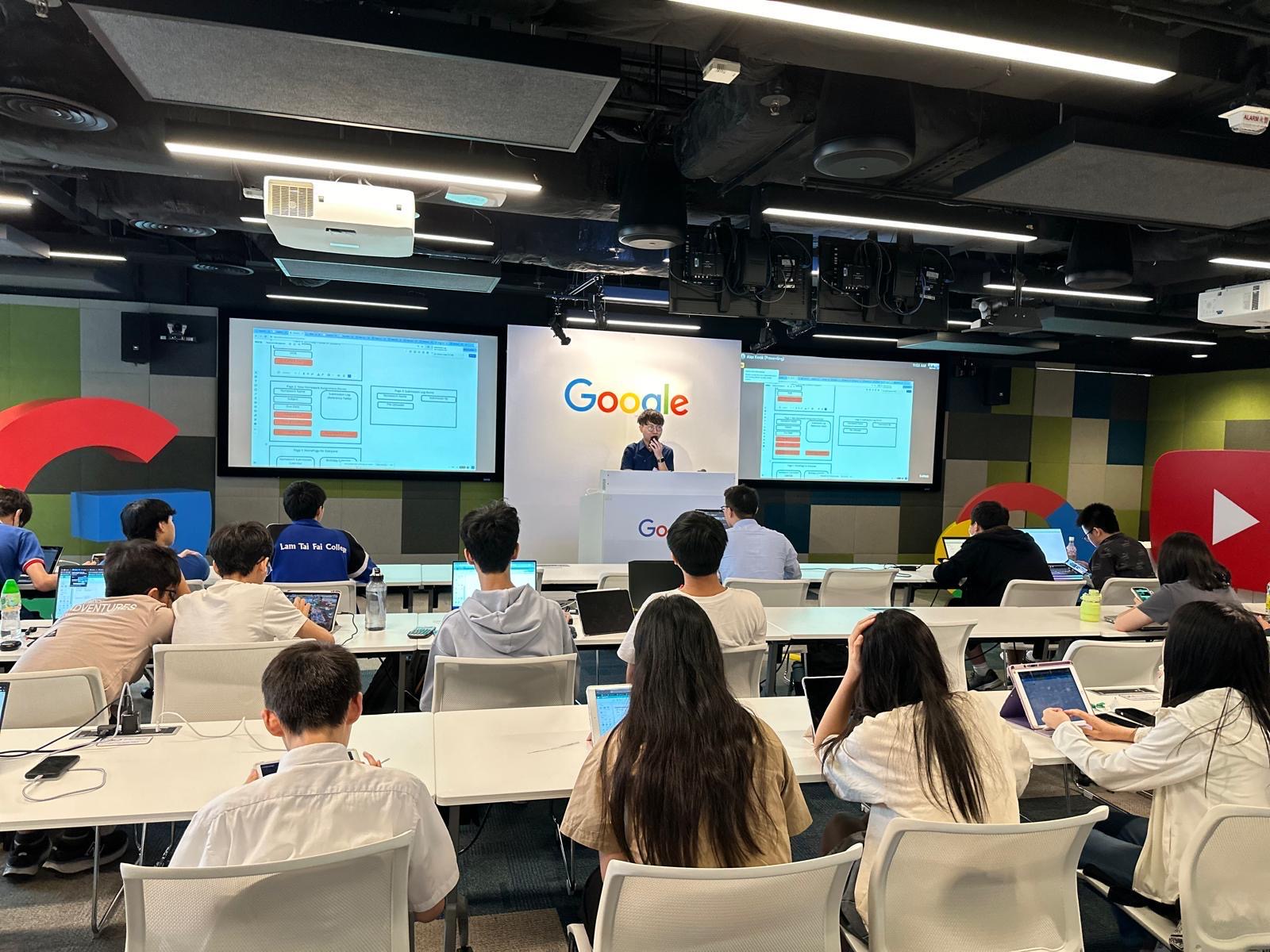
On 27 April, INSPIRE instructors returned to Google Hong Kong's office at Times Square, Causeway Bay, for Day Two of the Smart Campus Training Programme's Innovation & Technology Enrichment Course for secondary students. The session ran from 09:30 to 12:15. This lesson taught students how to use a no-code platform to create a simple classroom management system.
The instructor focused on using the no-code platform DragOnce. DragOnce is a no-code platform that allows users to build powerful business applications, spreadsheets, and reports through simple operations to boost productivity. Whether for design and development or practical work applications, DragOnce brings great convenience — editing forms, workflows, reports, collecting and applying data, digitalising approval processes, and outputting display data — so that anyone can create their own digital solutions and innovate workflows.
Students in the workshop primarily learned design thinking and app development. The expected learning outcomes were for students to understand what design thinking is and how to apply it to their existing work plans, and to learn how to use the no-code tool DragOnce to build enterprise web or mobile applications. The five steps of design thinking include empathy, defining needs, ideation, prototyping, and testing, incorporating people's needs, technological possibilities, and success factors.
Role-Playing Activity
The workshop also included a role-playing activity where students split into designers and buyers to explore their own needs or pitch ideas to potential buyers to earn their trust. This activity reinforced that design thinking cannot begin without a deep understanding of users — it requires synthesising users' needs, desires, and difficulties to arrive at a comprehensive result before starting work.
Four Stages of Design Thinking
The main design thinking methodology was divided into four stages: explore and express, deep understanding, co-creation and ideation, and validation and refinement. The instructor explained each step in class, then guided students through two exercises: mapping their journey to the workshop that day, and mapping a journey of taking a flight to a destination. Both exercises focused on identifying touchpoints and investigating potential problems that may arise at those touchpoints. The instructor also introduced how to establish a problem-solving model to regularly check whether your solution is addressing the right need.

Building a DragOnce Application
The instructor then introduced how to build a work order system based on the scenario's stakeholders, processes, and data, structuring it as order forms and order records. After completing the basic introduction, students were guided to build a DragOnce application — using the no-code platform to create a leave application system, with the instructor walking them through step by step so they could put the course content into practice along the way.